

Posts filed under:

Subscribe:

Latest from the Blog:

02 Nov 2011 | Written by

St Paul’s Cathedral Protesters: the Dilemma facing the Church

Further Reading:


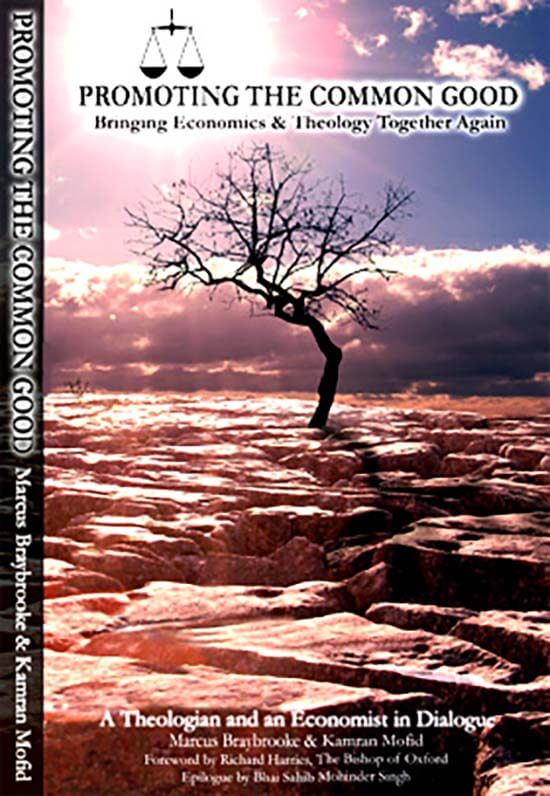
Promoting the Common Good
by Kamran Mofid and Marcus Braybrooke


Christianity and Social Order

by William Temple

As the protest camp on the steps of St Paul’s Cathedral drags on into another week, the dilemma facing the church authorities intensifies, so much so that now three servants of the cathedral have resigned, including the Dean.

The protest is not against the Church as such but just happens to be located on its doorstep so that it cannot avoid taking sides to some degree in the confrontation between the protestors and the City. The protest is forcing an uncomfortable re-examination of the Church’s social conscience. Finding answers to this dilemma will require both wisdom and courage.

In seeking a solution they might like to consider the dialogue between a theologian and an economist in Promoting the Common Good. Recommending it, the Bishop of Oxford wrote ‘I very much welcome this book and believe that its themes are of crucial importance to the world today’.

They might also like to turn to Archbishop William Temple’s classic, Christianity and Social Order, which poses challenging questions on the relationship between Christianity and the social order. Known as the ‘People’s Archbishop’ for having championed economic justice in the 1920s and 30s he wrote: ‘The art of government in fact is the art of so ordering life that self-interest prompts  what justice demands.’

Can our government and churchmen rise to this?
Comments (2) | Posted in Blog

2 Responses to “St Paul’s Cathedral Protesters: the Dilemma facing the Church”

  1. Remote Observer says:

    Several aspects of this post are thought-provoking, to say the least.

    Not only is the protest not against the Church, it happens to be inspired by some of the very values on which the Church is built.

    In that respect, being located on its doorstep would seem a natural choice, based not on confrontation but perceived unity of ideals.

    If the Church is to provide a constant beacon of moral and spiritual guidance then ‘taking sides’ is not a consideration. It is more an issue of standing firm for what the Church represents, welcoming those who have compatible principles and ideals, and exploring common ground.

    The issue of taking sides is perhaps more appropriately (and uncomfortably) addressed to just about everyone else.

  2. EE Staff says:

    This comment is a useful reminder that the protest is in fact inspired by Christian values. We tend to forget in this secular age that our values have been transmitted down the generations via the Church. The fact that the Church has from time to time fallen short of its own ideals is not a reason to ignore the ideals which underpin civilized society.
    For society, the most important of these is justice. What the protest is drawing to our attention is the failure of government so to ‘order life that self-interest prompts what justice demands’, as William Temple expressed it. The protest is an expression of outrage that the self-interest of bankers and other CEOs has been allowed to over-ride the just demands of the rest of society. This prompts the question: What is justice?
    Above the Old Bailey Justice is symbolized a woman with a sword in one hand and a pair of scales in the other. She is blind-folded (not blind) to signify that justice is dispensed without fear or favour, disregarding wealth, social status, gender, race or religion. A famous definition of justice was given by the Roman Emperor Justinian: ‘Render to everyone their due’
    What is everyone’s due? Herbert Spencer in his Social Statics points to a deep flaw in our society which we all accept unquestioningly, rather as slavery once was:
    ‘Given a race of beings having like claims to pursue the objects of their desires; given a world adapted to the gratification of those desires – a world into which such beings are similarly born – and it unavoidably follows that they have equal rights to the use of this world. For if each of them “has freedom to do all that he wills, provided he infringes not the equal freedom of any other”, then each of them is free to use the earth for the satisfaction of his wants, provided he allows all others the same liberty. And conversely, it is manifest that no one … may use the earth in such a way as to prevent the rest from similarly using it; seeing that to do this is to assume greater freedom than the rest … Equity, therefore, does not permit property in land,’
    But nobody is going to sow where he cannot reap. Spencer explains: ‘Instead of leasing his acres from an isolated proprietor, the farmer would lease them from the nation … A state of things so ordered would be in perfect harmony with the moral law … on such a system, the earth might be enclosed, occupied and cultivated in entire subordination to the law of equal freedom.’ The remedy need not be confined to farmland: the same could be said of domestic property, factories, offices and shops.
    It was the genius of Henry George to show in Progress and Poverty how equal access to the bounty of Nature could be secured through a reform of taxation. Hong Kong, albeit an imperfect example, provides evidence that an economy based on leasehold rather than freehold can flourish.

    Is the Church ready to lead the protesters in a great moral crusade, like Wilberforce, to right this great injustice which leads to the grotesque mal-distribution of wealth which has prompted the occupation?